Emirates’ strategic goal at the time was to communicate the breadth of its destination network — not through lists, but through something people could actually feel.
The trigger was a Getty Images case: their internal doodle-search tool let photographers sketch a motif to find matching stock images via machine learning. The question was simple — could that logic work for travel dreams?
I tested Google Vision API with a rough sketch. The network classified landscape types, coastlines, and architecture even from imprecise drawings. That was enough to write the concept.

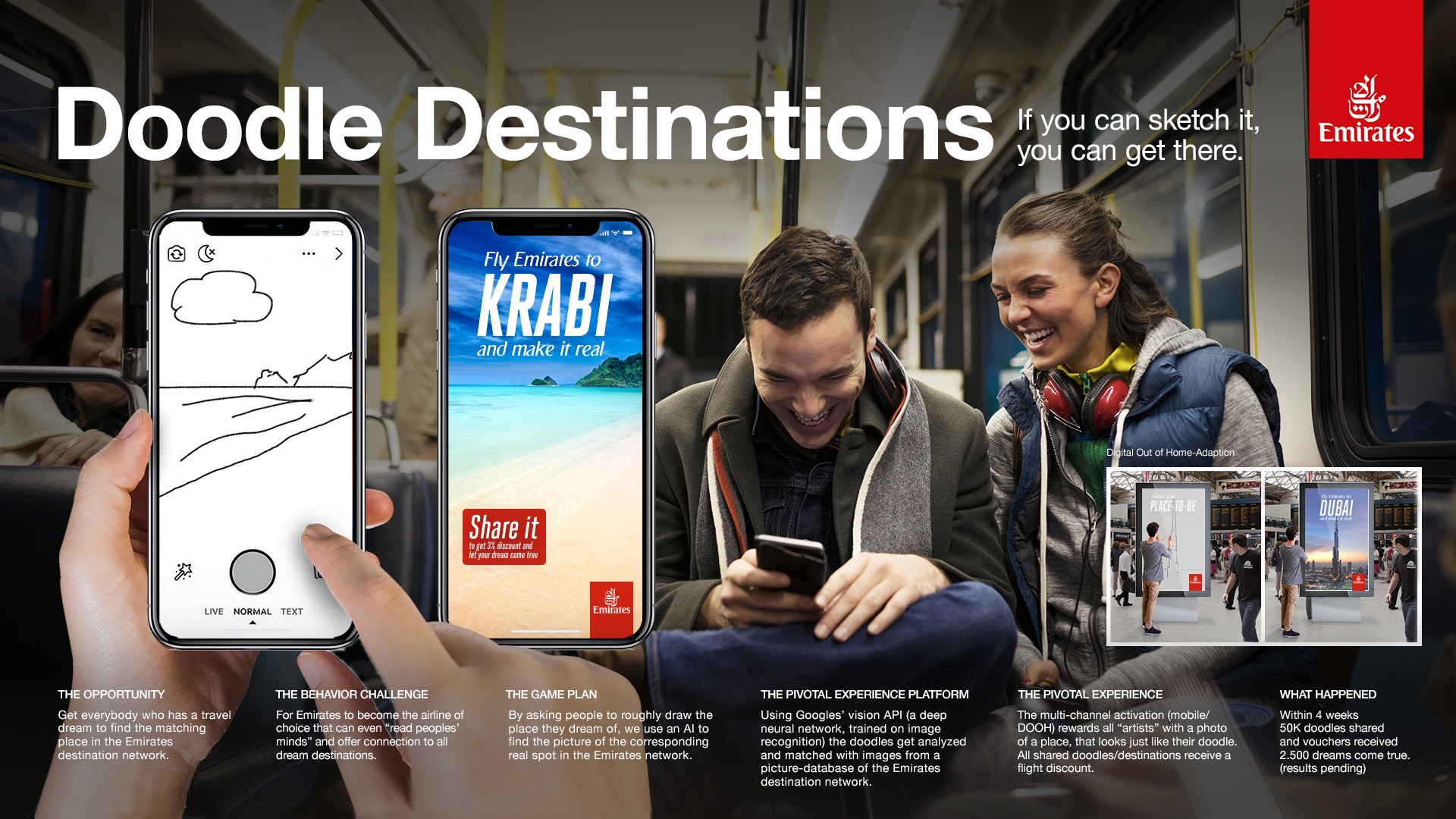
Doodle Destinations Pitch Deck Creative Board
The original concept was built around Instagram — the one platform where people were already using for travel inspiration.
A user opens an Instagram Story, sketches their dream destination — a beach, a skyline, a mountain range — and tags the Emirates account. A bot analyses the sketch via Vision API, matches it against a database of Emirates destinations, and replies with the result: the original doodle alongside a photo of the matching place, with the user tagged. A DM follows with a discount code for that destination.
No app download. No form. Just a sketch and a match.

Phase 0 — Idle: blank canvas prompting the user to sketch their destination

Phase 1 — Draw: user sketches a travel scene on the Instagram Story canvas

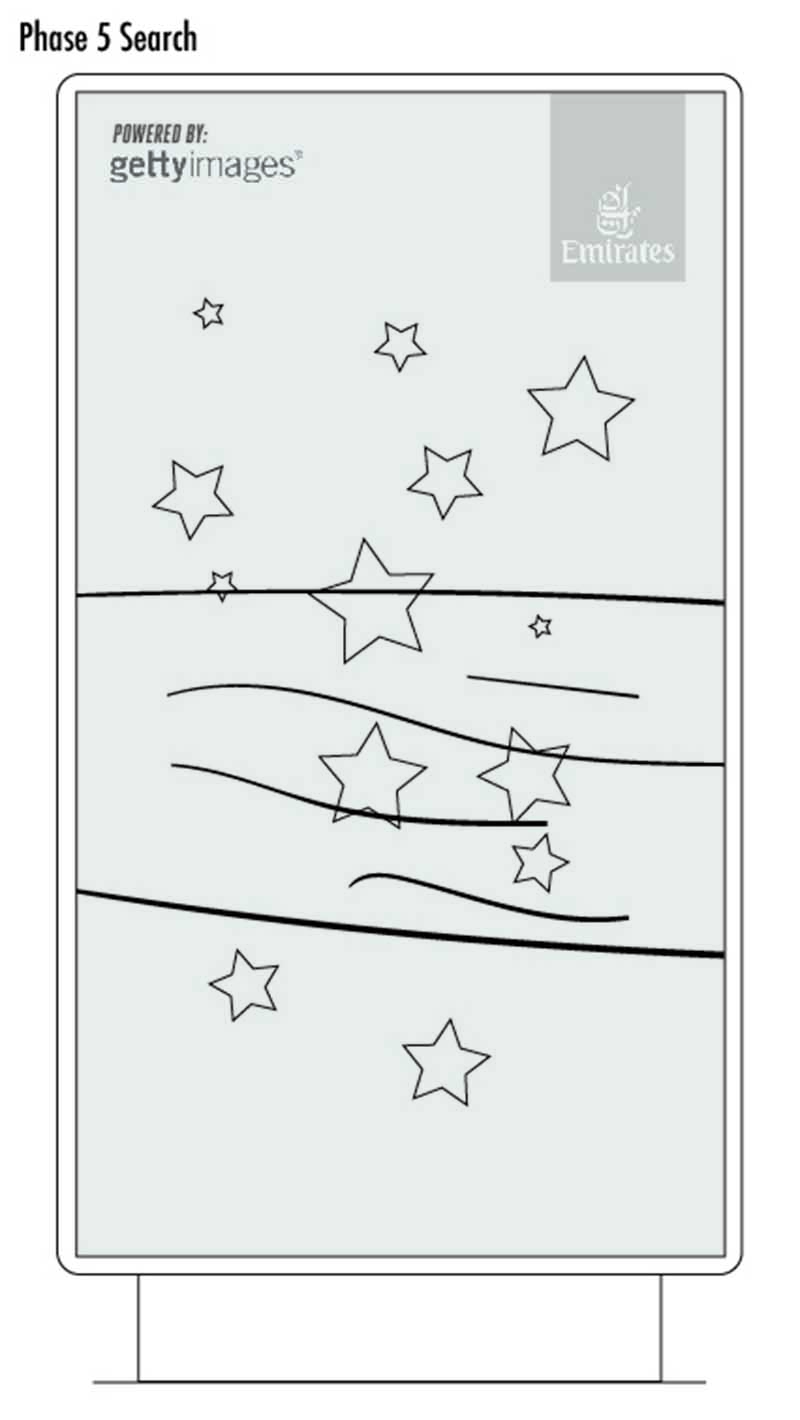
Phase 5 — Search: Vision API matches the sketch against Emirates destinations

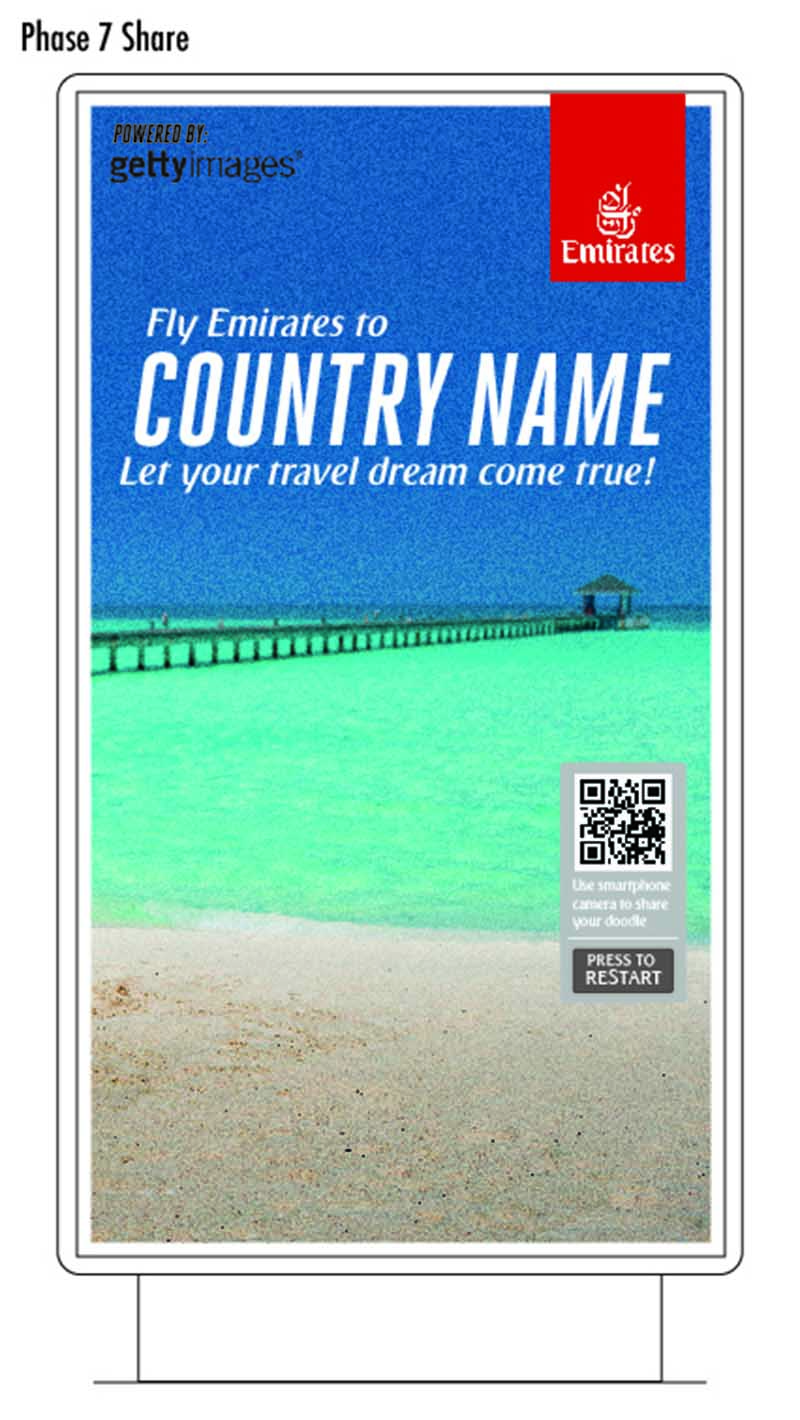
Phase 7 — Result: destination photo alongside original sketch, with personalised flight offer
The matching logic ran on Google Vision API — a deep neural network trained on image recognition across landscape types, architectural forms, and natural features. Even rough sketches carry enough structural information for classification: a curved horizon reads as coastline, vertical shapes cluster toward cities.
Animated Phase Flow
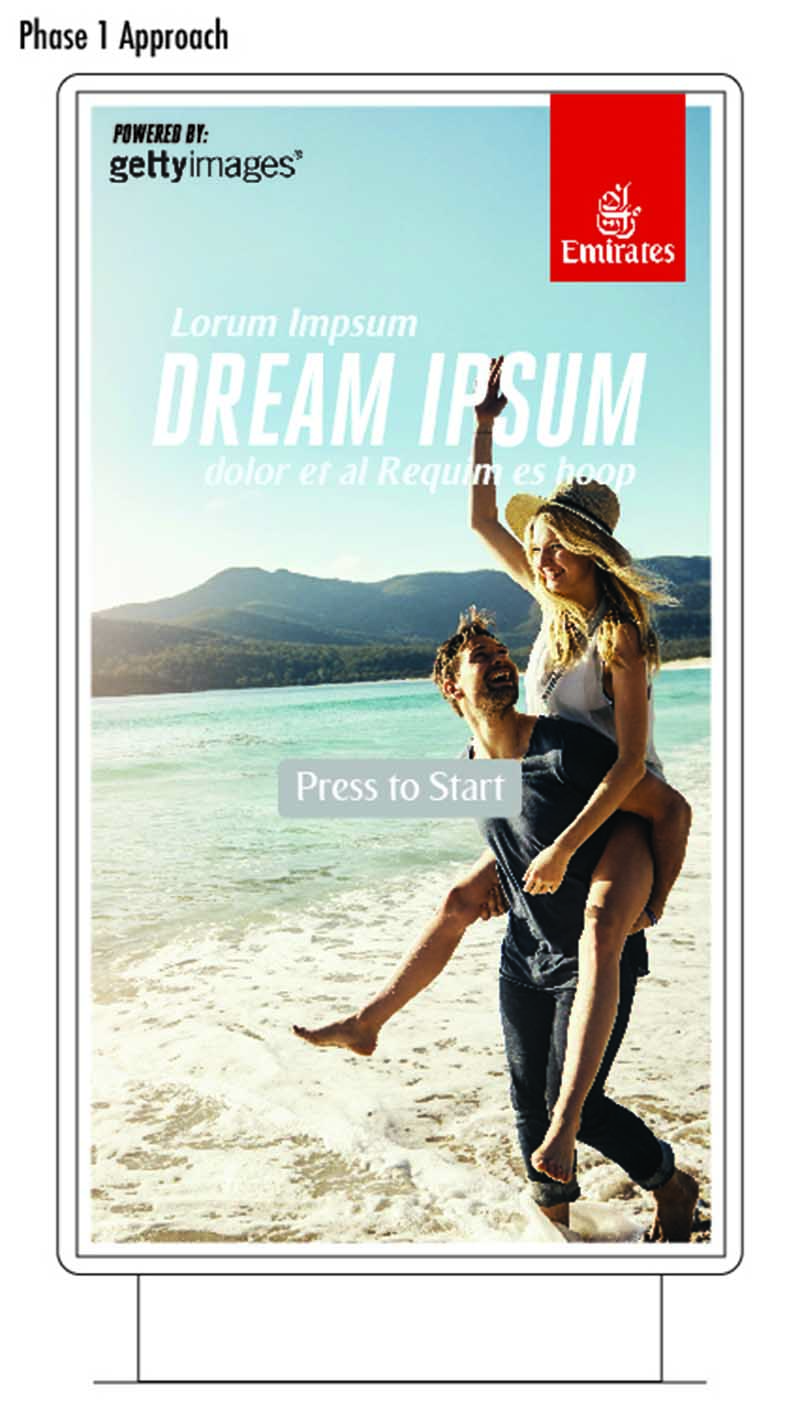
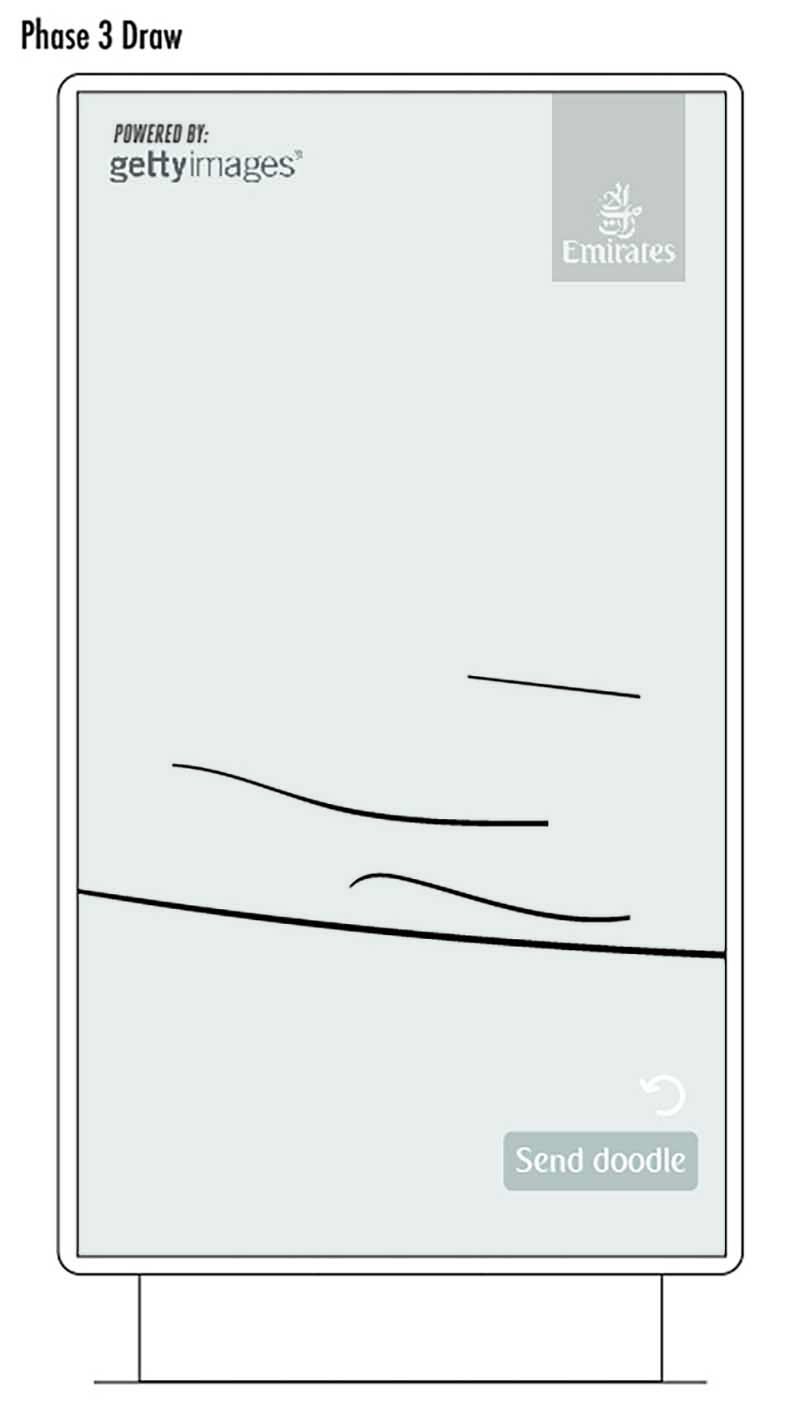
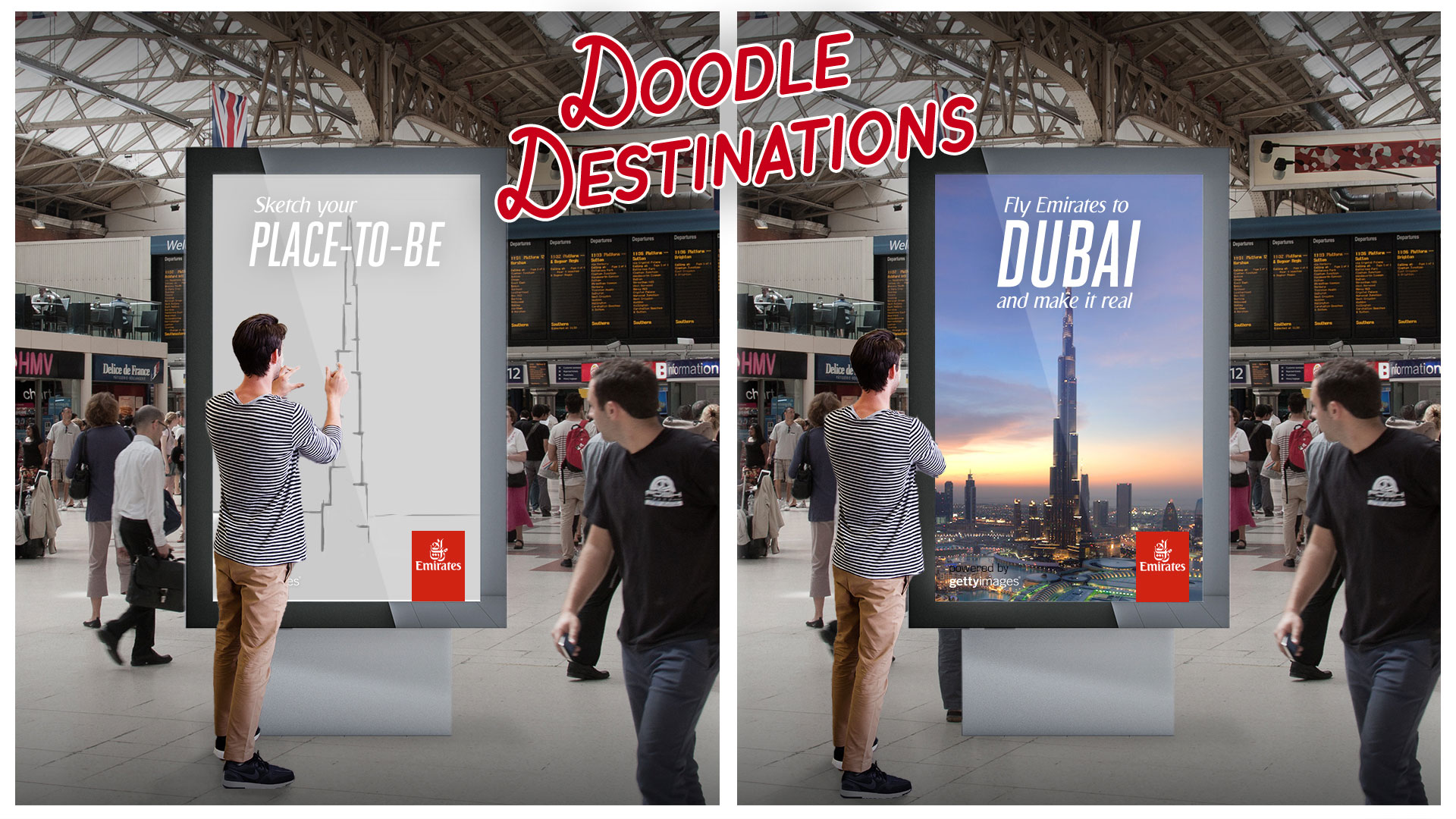
A second execution extended the concept to large-format screens in train stations and airports.
Users sketch directly on the screen. The same matching logic runs. The reveal — destination photo, flight offer — plays out at billboard scale. A QR code continues the experience on mobile.
The format was developed for award-case potential: a sketch portal to another place, built into the architecture of departure.

The full concept was developed through to prototype stage: a six-section case board, a complete mobile user flow (sketch input through to share CTA), DOOH mockups, social ad executions, and an animated walkthrough.
In 2018, semantic image matching for consumer brand activation was genuinely novel. The infrastructure existed. The use case was clear. The prototype budget was €6,000.
It was a pitch. It didn’t get built.