PwC sought to rethink how employer branding is communicated. Instead of listing benefits or repeating generic value propositions, the goal was to let talent experience what working at PwC feels like.
The company planned to use the experience first and foremost as a showcase inside the PwC ImmersiveLab — a space where future-facing technologies are demonstrated to clients. The VR experience needed to convincingly illustrate why immersive tools can elevate talent acquisition.
The solution had to be highly accessible, clearly structured, and compelling across strategic stakeholders, from HR leaders to technology decision-makers.
I led concept development, user experience, narrative design, and prototyping.
My focus was on transforming abstract employer values into clear, spatial interactions, setting up a production process that enabled a high-quality rollout within five weeks, and shaping a demo asset that PwC could confidently use with clients.
PwC needed a modular, narrative VR format that could be rolled out within five to six weeks — fast enough to match internal innovation timelines and polished enough to represent the brand’s technology leadership.
The opportunity was to create a compact, guided experience that:
In short: a format that authentically communicates PwC’s culture through spatial storytelling.

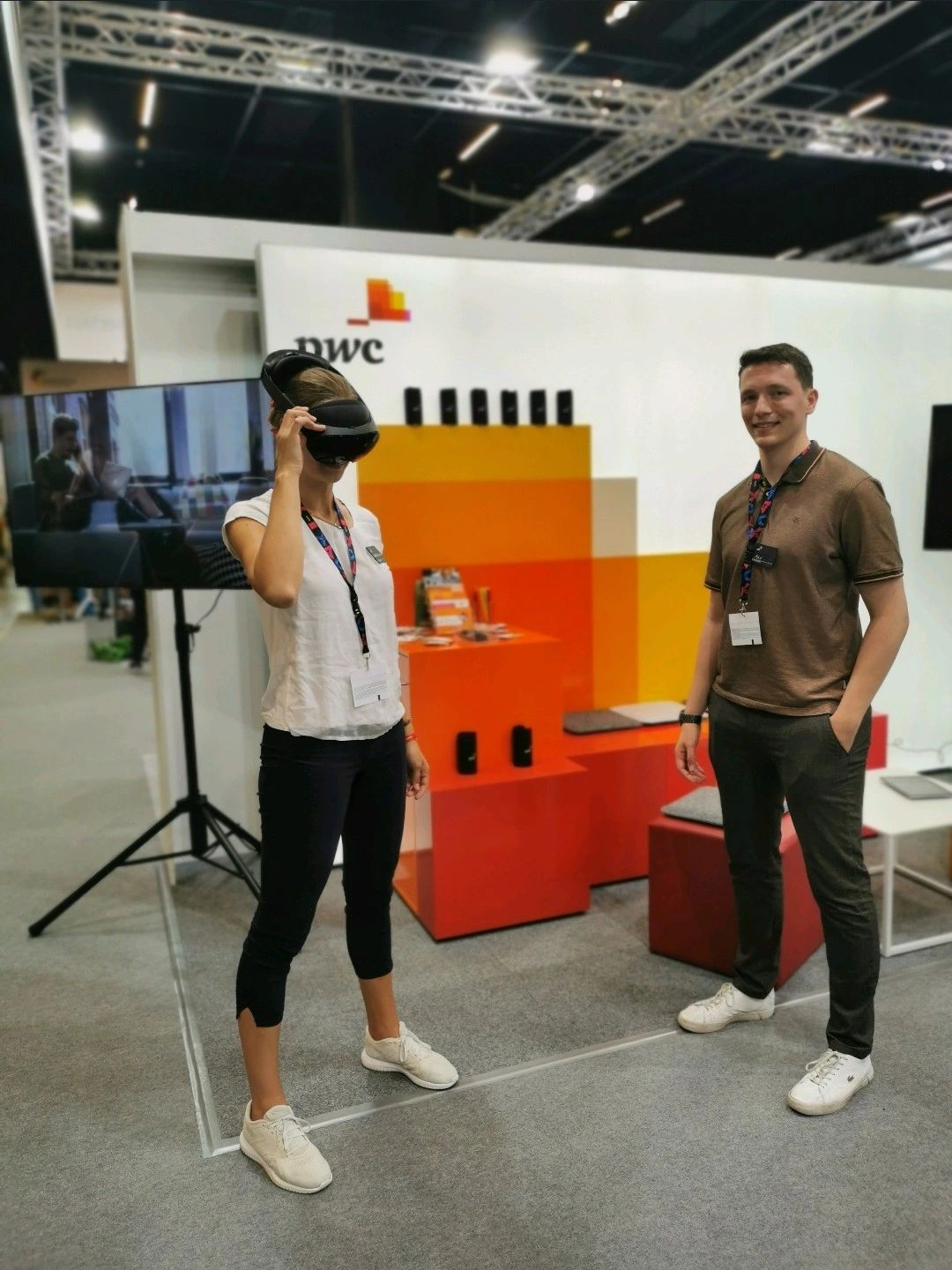
PwC Germany VR Recruiting was first used at the GamesCom 2023.LinkedIn
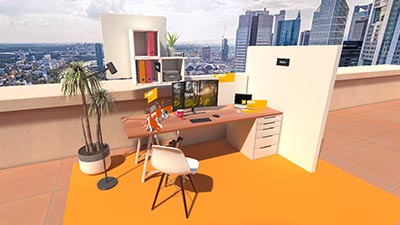
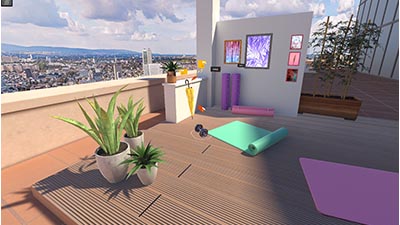
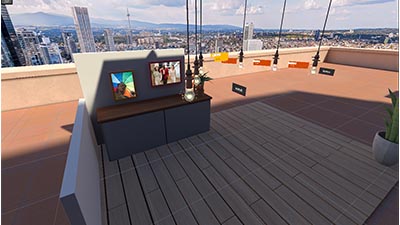
I designed a narrative structure composed of four micro-scenes, each translating a core employer value — such as flexibility, health, social security, or team culture — into an interactive spatial metaphor.
The design approach followed three principles:
This clarity made the experience effective for both strategic presentations and fast-paced live demonstrations in the ImmersiveLab.
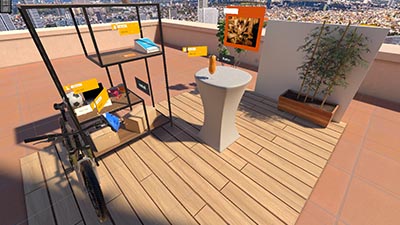
The VR experience is set on the rooftop of PwC’s Tower 185 in Frankfurt — a symbolic, elevated vantage point for exploring what working at PwC entails. The four scenes included different interactive assets:
The full experience took around seven minutes with all interactions optimized for short, high-impact cycles, ideal for guided demos and executive sessions.
The entire project – from ideation to rollout – was completed in five weeks.
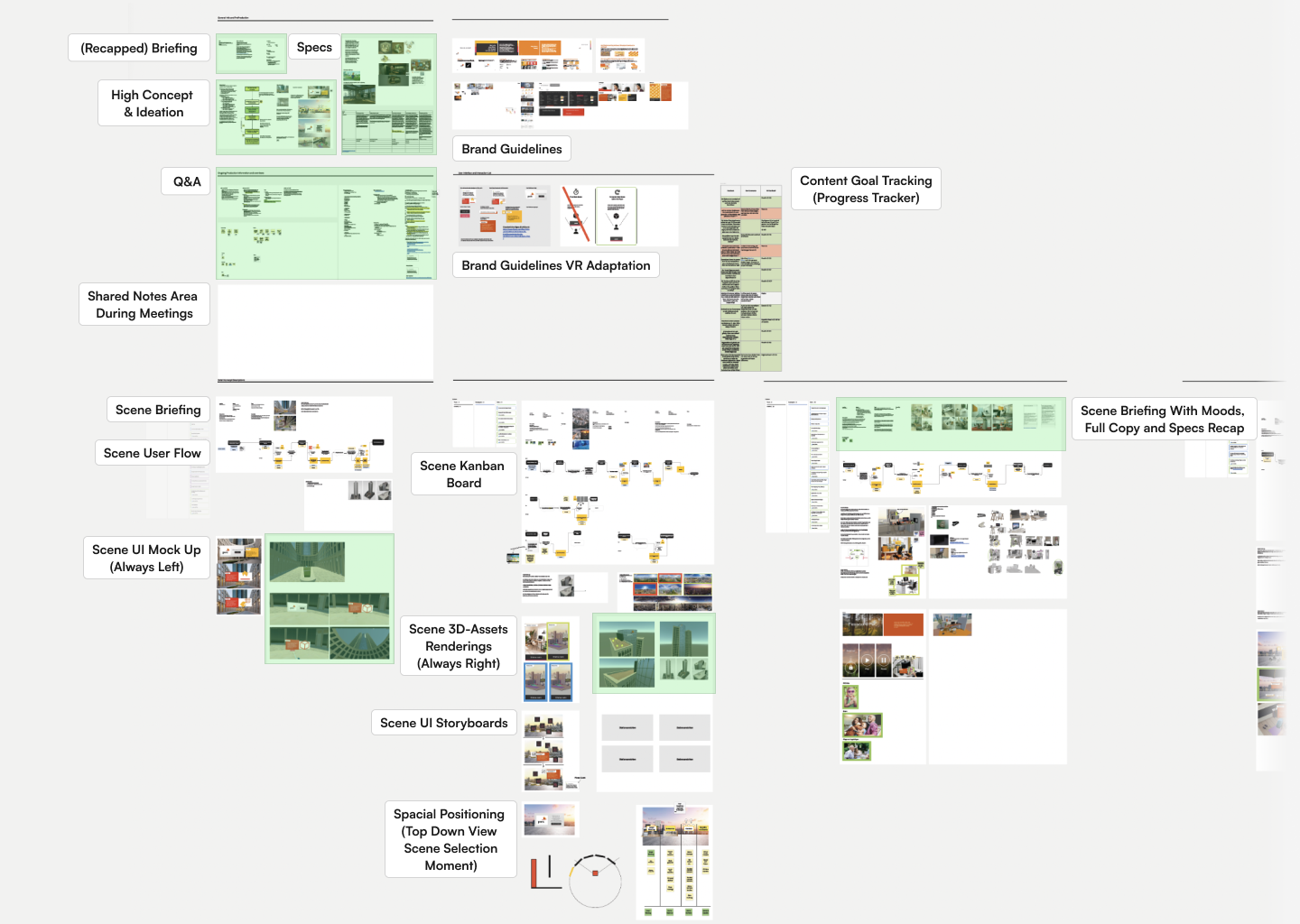
To deliver at this pace, I established a process oriented toward transparency and iteration:
Importantly, the primary delivery target was a polished, reliable #ImmersiveLab demo: a product PwC consultants could use to demonstrate the strategic value of immersive recruiting to clients.
Secondary use cases such as trade fairs and HR activations were enabled by design but did not drive the core process.

Tapping an edge instantly reveals its dimensions.
The VR experience quickly became a strategic sales asset within the PwC ImmersiveLab, used to showcase how immersive tools can reshape employer branding and talent engagement.
Later, PwC adopted it for:
The project contributed to PwC’s broader narrative: employer branding should not be claimed, but felt.